Art World Database speaks to Wyn-Lyn Tan about her practice and her current participation in TERRA II, a group exhibition set across historical buildings in Burgundy, France. Curated by Jenn Ellis and Emie Diamond, the featured artists are asked to consider the theme terroir, which is closely coupled with place and environments.
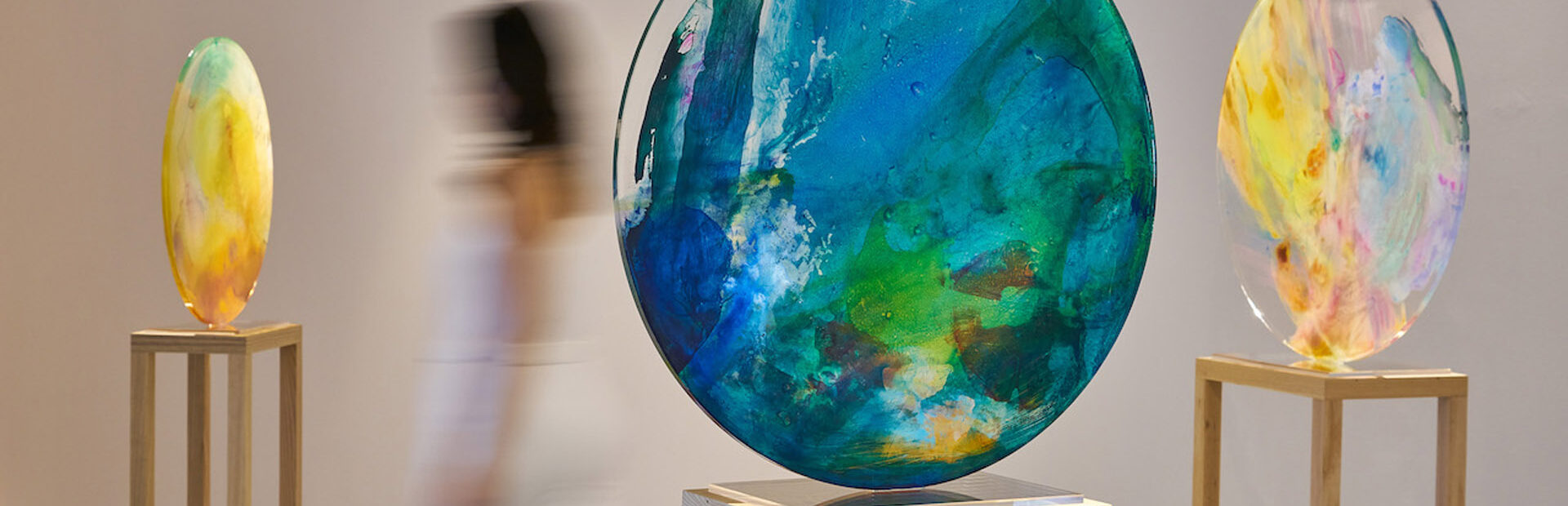
Wyn-Lyn’s work embodies the essence of this theme perfectly, with the oeuvre of her work centring on her observation of the natural world and its phenomena. Her primary medium is painting, which she applies across a range of different media, from traditional canvas to more abstract materials such as plexiglass, metal patina, and soil.
Her work is recognisable as nature, but obscured into the abstract, creating otherworldly spaces and feelings, mimicking our indescribable connection to natural environments. She treats landscapes as more than physical, exploring their cultural and emotional connections.
Could you walk us through the works you are showing at TERRA II, and how they respond to the idea of terroir?
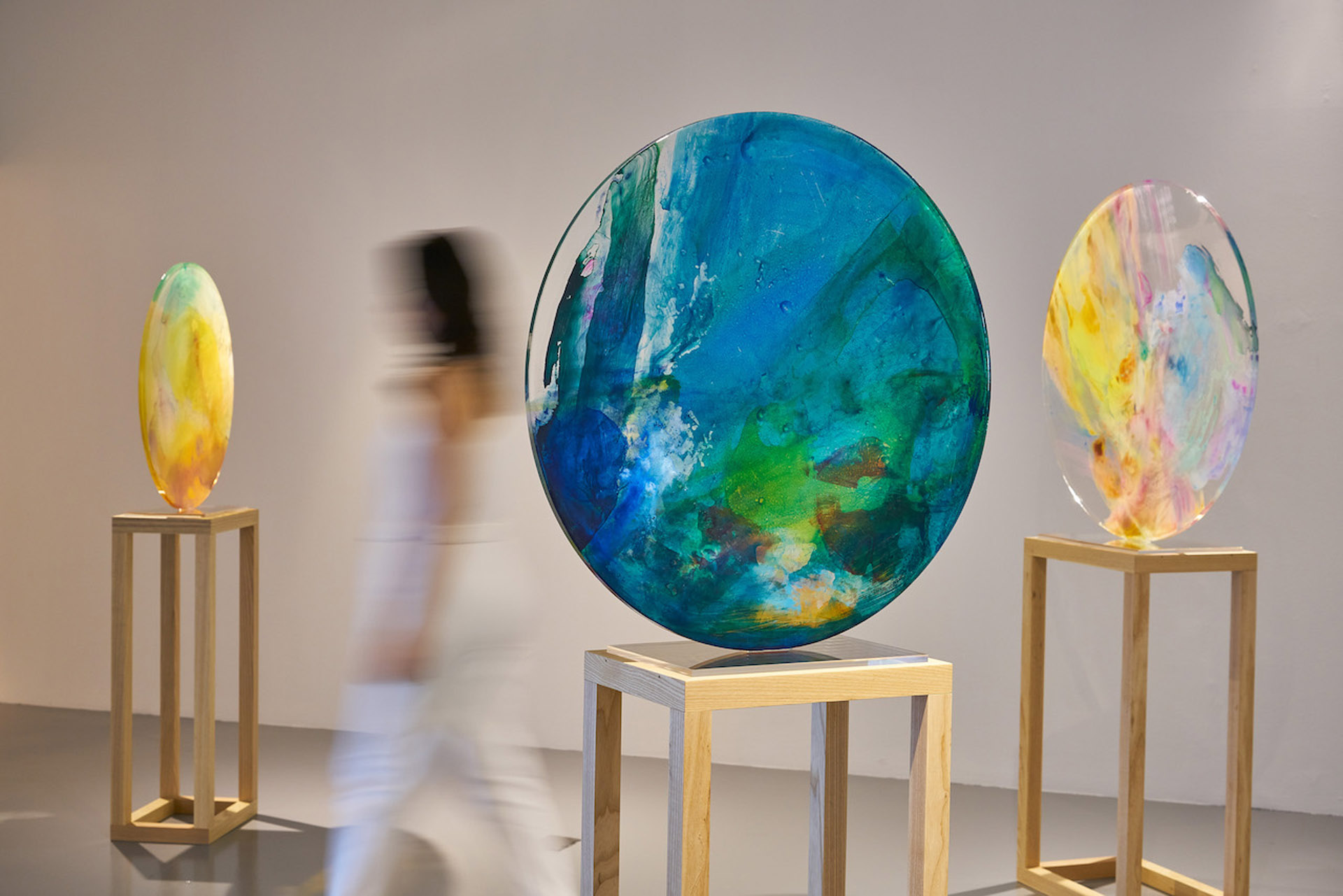
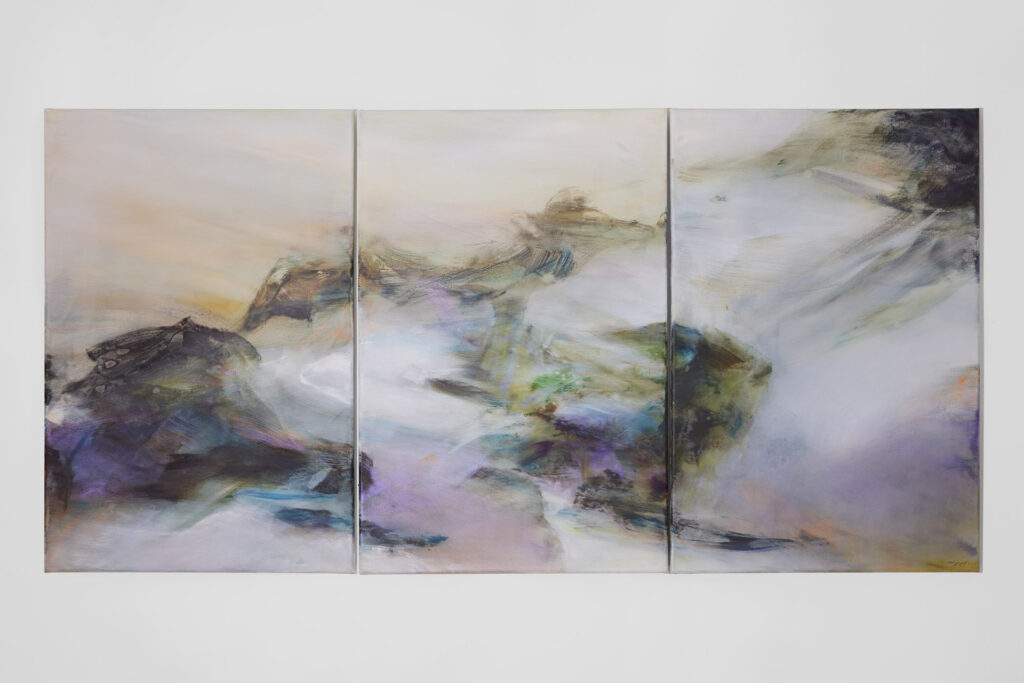
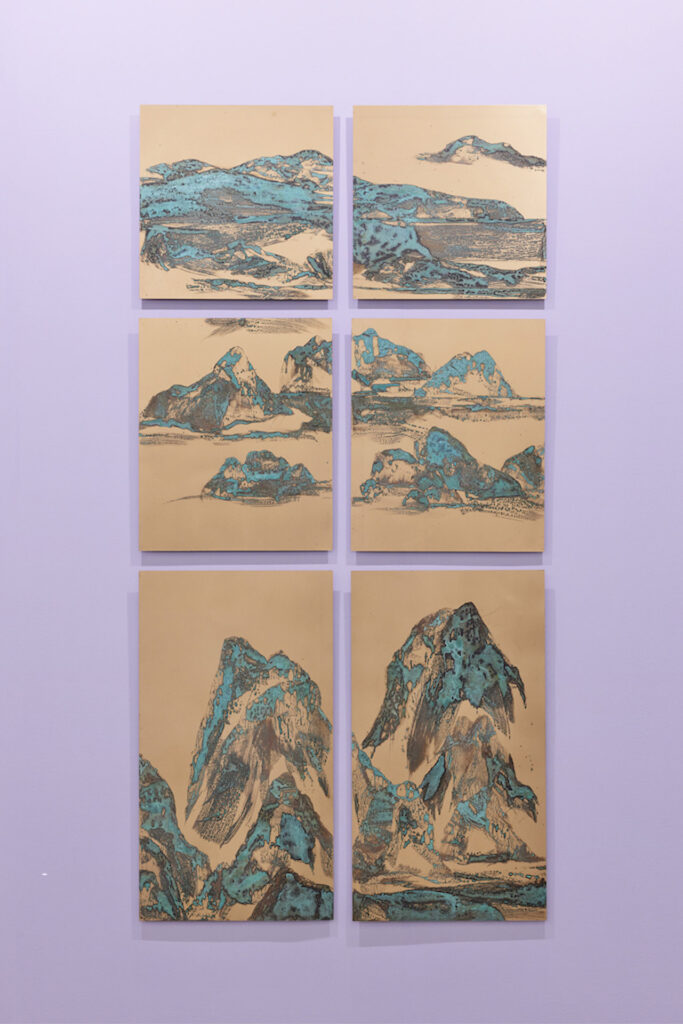
For TERRA II, I’m presenting a triptych titled Terrestrial Dust. Inspired by the French expression l’heure bleue, or ‘the blue hour’, I wanted to capture that fleeting twilight moment between day and night when light takes on an otherworldly, cool luminosity. This moment of transformation also hints at windows or portals into another dimension, as it invites the viewer to step through and experience this ethereal, in-between space.
The idea of terroir is deeply tied to a sense of place, which I interpret not only as a physical environment but as an emotional landscape shaped by the land and its culture. For me, Terrestrial Dust embodies this sense of place, but in a way that’s paradoxically both vivid and elusive. The panels capture a world in flux, a space where land, water, and sky merge and dissolve into one another. The highly gestural, abstracted narrative reflects the shifting nature of our world, echoing the forces that shape and transform a landscape over time.
This sense of flux connects to the core of my practice—exploring nature, light, and our connection to the rhythms of the natural world. Through nuanced shifts in hue and colour, Terrestrial Dust draws the viewer into a quiet, almost mauve atmosphere, evoking the stillness of dawn or the last light of a dying star. The painting not only speaks to the land’s terroir but also to a universal longing for connection with something beyond ourselves, something both grounded and endlessly expansive.
How do you find the space in which your work is exhibited affects it? And in what way do you think the TERRA space does?
The space in which my work is exhibited plays a crucial role in shaping the viewer’s experience. My paintings often engage with subtle shifts in light and atmosphere, and I consider the surrounding environment almost an extension of the work itself.
For TERRA, I’m excited by how the site’s heritage architecture creates a heightened experience of the work’s elemental and atmospheric qualities – creating both a visual and sensory experience of place.
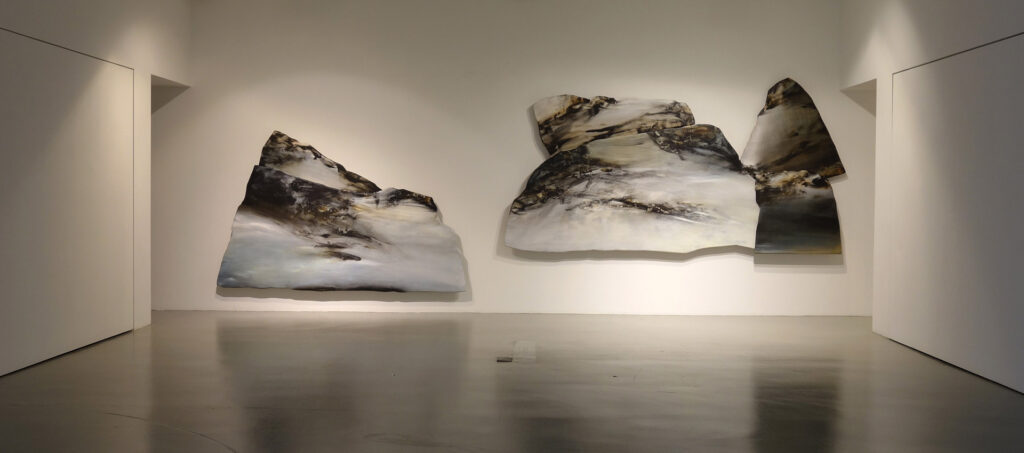
Your work often depicts abstractions of nature, through brushstrokes full of movement in their form, and in some cases AI. How do the landscapes in your work inform reality and what informs the decisions you make when you are creating?
For me, landscapes are far more than a genre; they are receptors of experiences and emotions – tied to the places I’ve lived and explored. My work is driven by a desire to reveal aspects of the natural world that often go unseen, elements that lie beneath the surface or exist at the edges of perception. In creating these abstractions, I’m seeking to map out an invisible reality—one where human experience is entwined with the intangible cosmic forces that shape our very existence. It’s a way of connecting what we can see with what we can only sense; perceiving nature’s vast exterior through the nuanced landscapes within us.
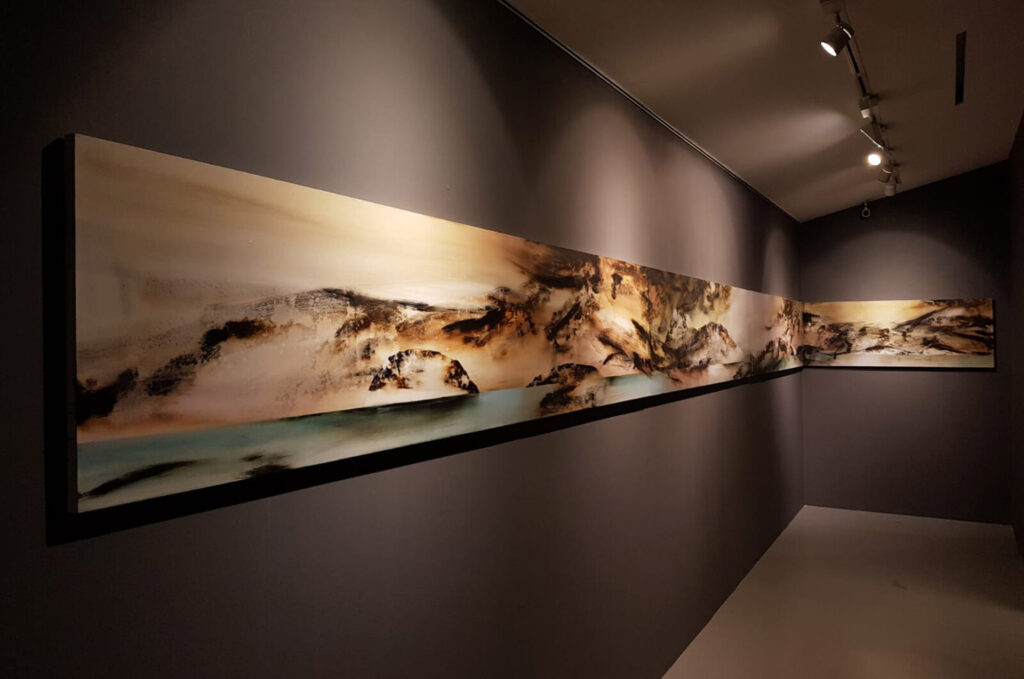
Considering the diversity of the different mediums and materials you work with, how does your process differ with each project?
I work in an intuitive and organic manner, where one series often leads fluidly into the next, carrying the essence of the prior work forward. The mediums I work with might appear diverse, but they are anchored around a continuous interest in uncovering the intangible forces that shape our environment and our inner worlds.
With every new material I work with, I take time to understand its inherent nature. This fluid approach allows me to remain open to each material’s nuances, as I leave room for serendipity to guide me in directions I might not have anticipated.
What landscapes inspire your work, and is it important to you to spend time in nature?
Much of my practice is influenced by my time in the remote Arctic regions, where the landscape shifted my understanding of absence and presence. There in the vast landscape, I encountered an atmosphere of light and resonance in the emptiness quite unlike that in the equator.
Spending time in nature is vital to my practice and process. I think nature becomes as much a story as it is a place; it nourishes imagination and reconnects us to mysteries that can’t be experienced anywhere else.
Terra II is on until 17 November 2024 in Beaune, Burgundy, France, by appointment only. For more information, please click here.
INTERVIEW COURTESY OF ART WORLD DATABASE AND WYN-LYN TAN, OCTOBER 2024.