AWDB speaks with Ida Lawrence, an Indonesian-Australian visual artist, on the occasion of her participation in Art Jakarta 2024.
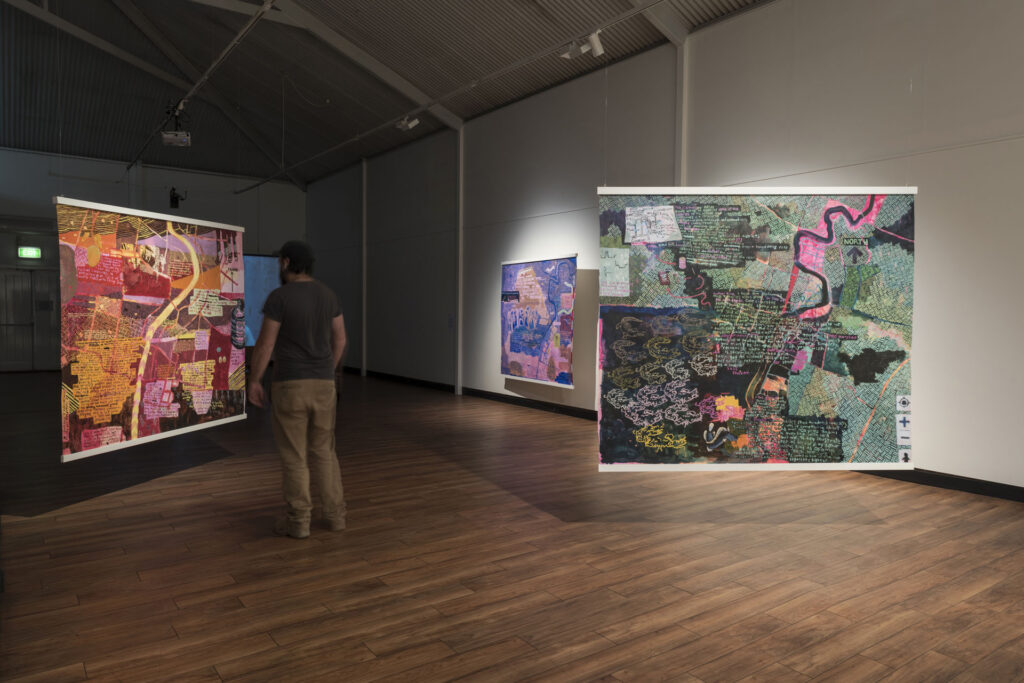
Ida Lawrence’s work combines images and texts to produce stories that invite the audience into her life. Her creative process starts with her records of real-life experiences, memories, observations, and sometimes ‘fiction based on real feelings’—stories she collects and sometimes can take weeks or even years to make onto the canvas. The result is a colourful, humorous, and unconventional mind-map-like visual essay.
Growing up in inner-city Sydney, Australia, with sporadic visits to family in Bali and Jogjakarta, she sees the world around her as multilayered rather than binary. In her early twenties, she moved to Jogjakarta and deepened her knowledge of Indonesian and Javanese cultures. She is part of Woven Kolektif, a collective of seven artists based in Australia who share diasporic connections to Indonesia. Their collaboration allows her to work on news mediums and learn from other members.
Ida Lawrence’s works will be presented at Art Jakarta 2024 by ISA Art Gallery alongside artists such as Sinta Tantra and Jumaadi, whom she mentions as early an influence in her work.
Tell us about your participation in Art Jakarta 2024. What is the body of work you are presenting?
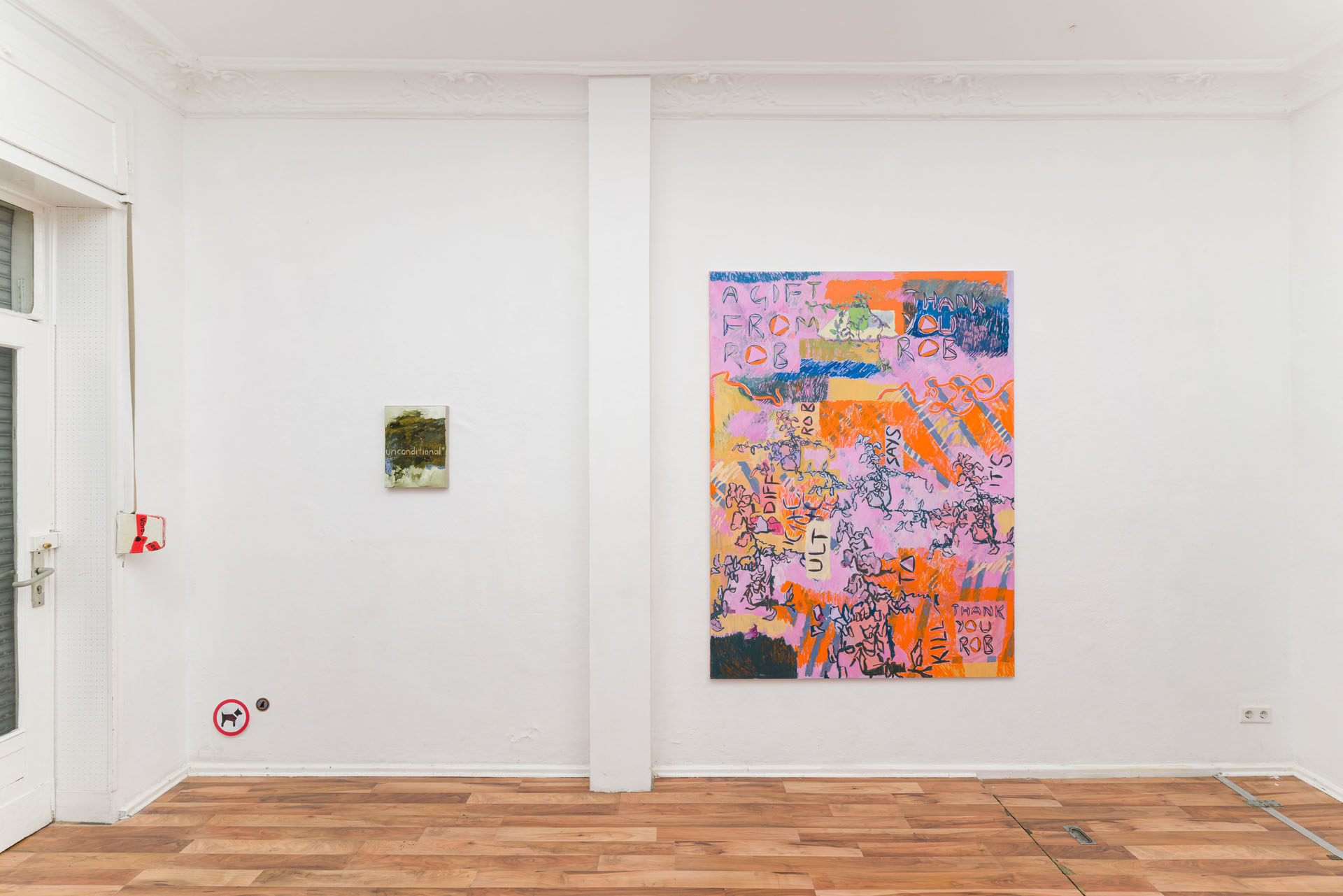
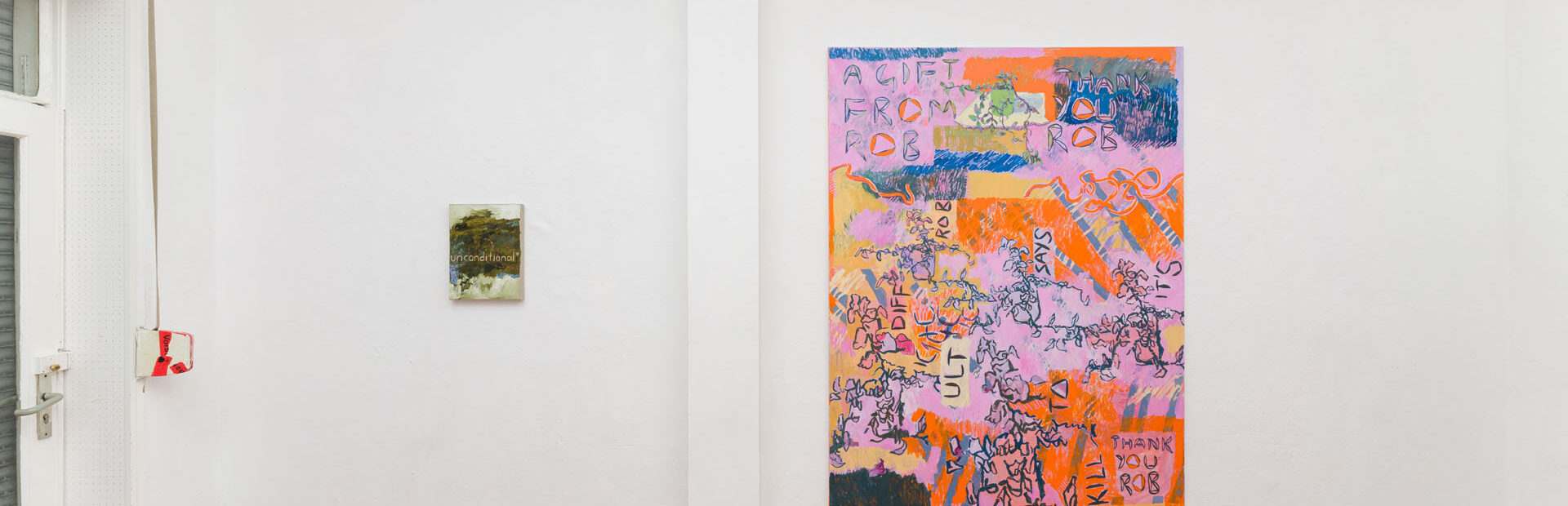
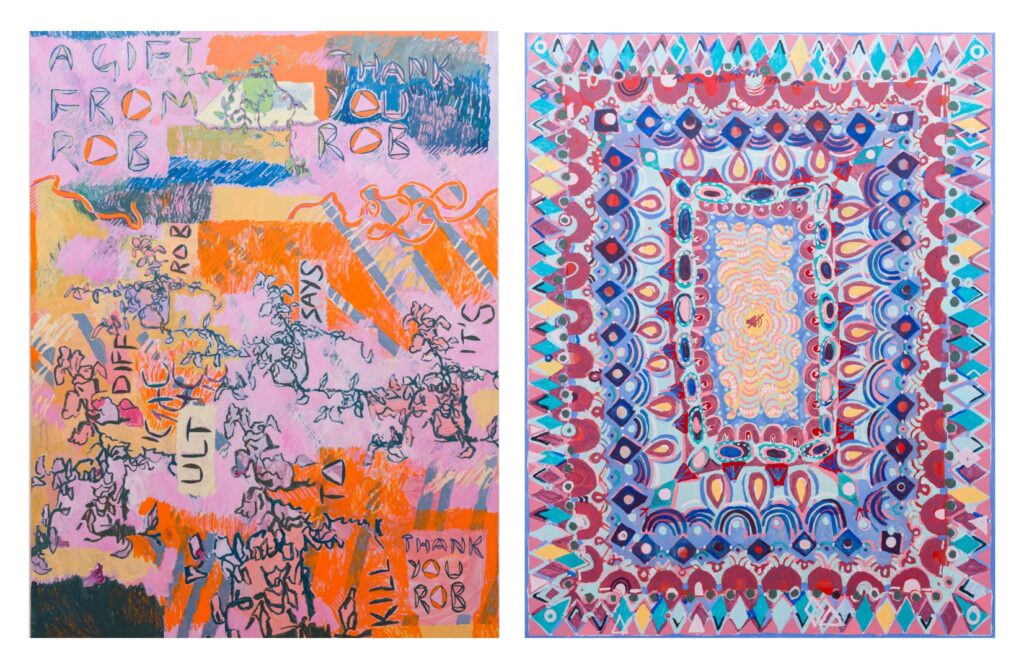
ISA Art Gallery will be showing two of my newest paintings — one called ‘A Gift From Rob’, which has a short rhythmic story painted amongst its bright colours, and another called ‘Loud Mute’, which (unusually for me) doesn’t have any words in it. Both vibrate with pattern and imperfect repetition, and some viewers might say they resemble textiles.
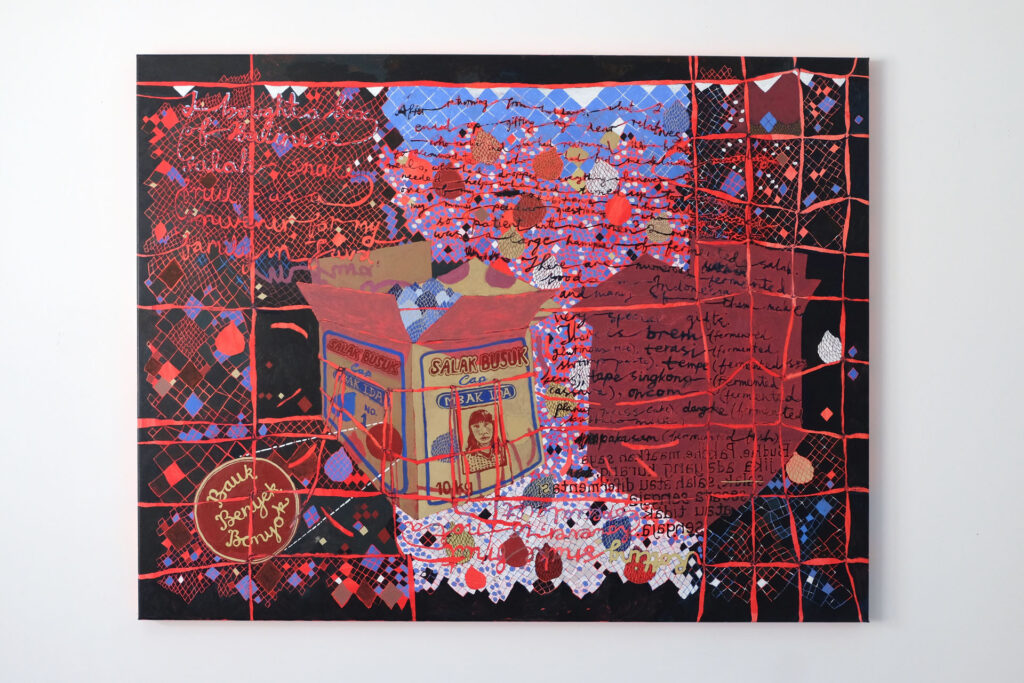
Coinciding with Art Jakarta, ISA Art Gallery is hosting the group exhibition ‘Everything We Inherit’, curated by Jennifer Yang, at their Jakarta gallery at Wisma 46. Amongst my fellow exhibitors who have Australian and Southeast Asian connections, I am showing two new paintings with much longer stories — about friendship, family, hospitality, and caffeinated beverages!
Your ‘narrative paintings’ combine images and text to produce playful visual essays about your experiences and observations. How is your creative process? Does it start from the stories or the images?
Each painting has a slightly different process, but I often begin by writing the story. I might scribble an idea or first draft in my sketchbook or send myself an email. Then I edit the text on my computer — the process can take weeks, years, or just an afternoon.
Sometimes, I’m casually testing out the story by narrating the anecdote to friends and seeing how they react. Just last night I told a story, which I intend to paint one day, to two friends. I was expecting them to laugh at the punch line, but they stared back at me in shock and the insects in the rice fields next to their place suddenly sounded very loud. So I might edit that one again.
The painting process is fluid (!) and perhaps like improvised music. I might know in which part of the canvas the text begins, or which images or patterns I’ll start with, but the finished painting and its composition and details is always a surprise.
Are all stories in your works real, or is there a dose of imagination as well?
Sometimes, I think of the works as fiction based on real feelings.
I’m curious how audiences relate to the stories, and whether believing the story and its characters are “real” or “not” changes the way they view the painting.
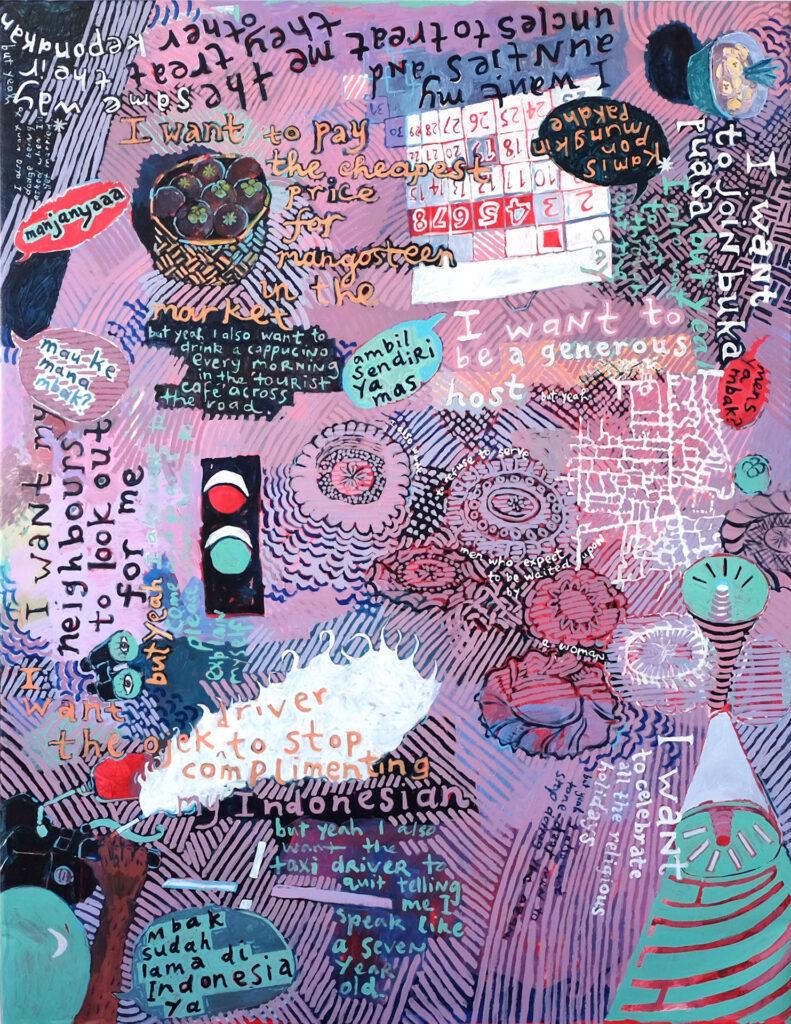
One of your works has humorous conflicting statements, such as:
‘I want the Ojek driver to stop complimenting my Indonesian, but yeah, I also want the taxi driver to quit telling me I speak like a seven-year-old.
I want to pay the cheapest price for mangosteen in the market, but yeah, I also want to drink a cappuccino every morning in the ‘tourist café’ across the road.’
Growing up in the diaspora, how was your relationship with Australia and Indonesia? How did this cultural duality influence your identity and art practice?
For me, rather than talking about “identity”, I prefer to describe how experiences shape the way I behave, how I see the world and how I create. And for me — as well as for everyone, I would argue — it’s always-accumulating, multilayered and more than binary. A lot of my work pays attention to and is inspired by “small” experiences, interactions and details. The frame of “duality” is a convenient narrative for understanding something, or someone. In my work I sometimes make contrasts in binaries, because it’s a neat storytelling device and it can be funny, but there’s always more to the story, right?
The culture I grew up in was an inner-city multicultural part of Sydney, on Gadigal land. I grew up around values like inclusion, imagination and creativity. It was in my early twenties, when I had the opportunity to move to Indonesia to study dance at ISI Yogyakarta, that I immersed myself in Javanese and Indonesian cultures and improved my Bahasa Indonesia. A lot of my work is inspired by experiences and interactions that move me emotionally somehow — for example, something that makes me laugh, confuses me, or surprises me. Temporal, geographic and cultural distance of course play a part in being fascinated by, moved by and inspired by things. Since moving to Germany for example, I’ve noticed myself asking the question “What is Australian humour?”.
What artists inspired and influenced you? You did a project with FX Harsono
(In Conversation: FX Harsono x Ida Lawrence) in 2019. Were Indonesian artists on your radar when you were growing up in Australia?
Yes, that was an amazing opportunity to have those conversations — both spoken and artistic — with FX Harsono. I learnt a lot about Indonesian history through his stories and his work. Pak Harsono is an incredible, and incredibly generous artist and person. That project inspired me to think about the nature of storytelling itself — how do we remember and narrate histories? What gaps are left?
Growing up, it was through sporadic visits to Bali and Jogjakarta that I got a taster of Indonesian art. I remember seeing I Gusti Ayu Kadek Murniasih’s paintings at the Ubud women’s gallery Seniwati when I was maybe six years old and being both captivated and scared! It’s exciting to see that in recent years her work has been getting more international attention.
In Australia, a formative encounter was meeting Jumaadi at an art school. I remember he once found me in the library, perusing the books about dead European male artists and said something like, “What are you doing, Ida? Come with me!”, and led me to the shelves with the books about contemporary Asian artists. It’s possible that Mas Jumaadi’s early paintings, which mixed poetry and images, were an influence on my practice.
Today, I’m still inspired by and in awe of so many practitioners, even if they’re working in very different ways from me. I’ve noticed too that it’s often friends who inspire me the most — in Indonesia, Australia and my current home in Germany.
You are part of Woven Kolektif, a collective of seven artists based in Australia who share diasporic connections to Indonesia. Can you tell us about your collective work and how it contributes to or complements your solo practice?
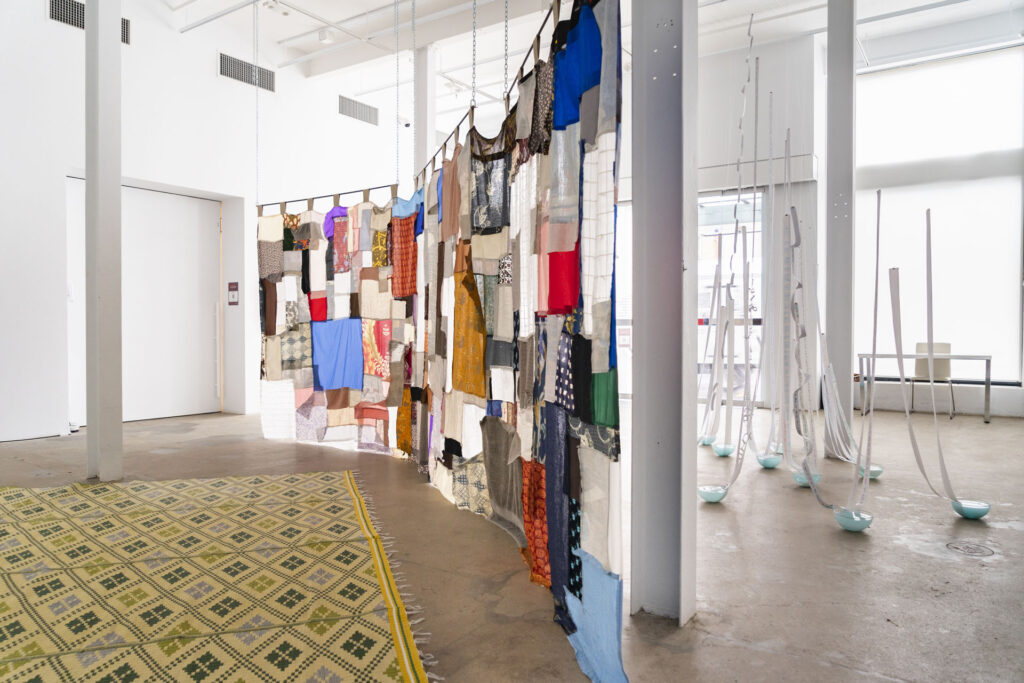
Yes, we are a group of artists, each with individual art practices that span sculpture, painting, textiles, video, sound/music, performance, photography and installation. We are currently based across five different cities; in Australia and me in Berlin.
When we work on collaborative projects, it’s an opportunity to work in new mediums, learn from one another’s perspectives and skills, and ask ourselves, and one another, different questions to those we might pose in our so-called solo practices (I think “solo” is myth — projects only happen thanks to the efforts of many). Woven’s earlier projects were often very much about Indonesia and our experiences there. We’ve departed from that in more recent projects though. But because we share those experiences of being connected to Indonesia from afar, we are able to draw from certain concepts without needing to explain it to one another. At the beginning of November, we are looking forward to a residency together at Bundanon in Australia and seeing what comes from the experience of living together.
Conversation, connection and collaboration are three things I want more of in my “solo” practice. New rhythms include dedicating a day each week to visiting other artists in their studios to learn more about their practices. When possible, I love to accompany my work to exhibitions so that I can speak with audiences using my own painted stories as conversation starters and speak with my fellow exhibiting artists. And the next dream for me is to find and invent new ways of bringing my stories to life — through new conversations and collaborations.
Art Jakarta will take place 4 to 6 October 2024 at JIExpo Kemayoran in Jakarta, Indonesia. For more information, please click here.
INTERVIEW BY GUEST CONTRIBUTOR ALESSANDRA DIAS AND COURTESY OF IDA LAWRENCE, OCTOBER 2024.